Suppose a tractor-trailer changes lanes on a Texas interstate and strikes your car. The driver says you drifted. You remember the truck crossing into your lane.
Witness accounts, photographs and driving records may help settle that disagreement.
This guide explains who may be responsible for a commercial vehicle crash in Texas, which records help establish what happened and how fault rules and deadlines shape a claim. It offers general information, not legal advice about your situation.
Key Takeaways
- Texas negligence claims require proof that conduct was a substantial factor in causing the injury, not just that the crash would not have happened without it.
- A trucking employer, loading company, maintenance contractor or freight broker may share responsibility alongside the driver.
- Federal rules require carriers to keep driver duty-status records for at least six months, so early preservation requests matter.
- Texas bars recovery only when a claimant is more than 50 percent responsible.
- Most personal injury suits must be filed within two years, and claims involving government vehicles can carry a six-month notice requirement.
Liability depends on conduct, control and causation
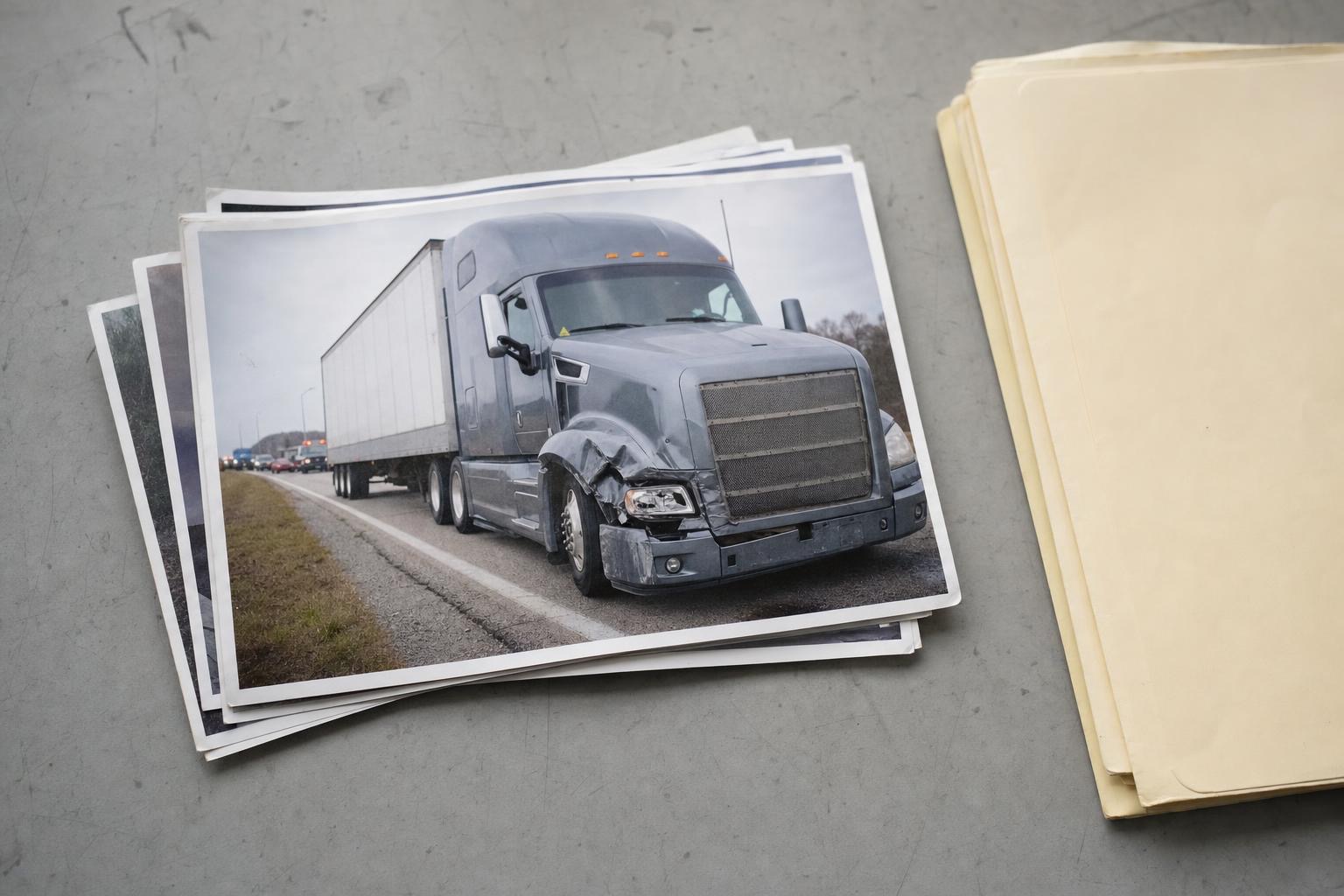
A Texas negligence claim asks whether someone failed to use reasonable care and whether that failure caused the injury.
In Werner Enterprises, Inc. v. Blake, decided June 27, 2025, the Supreme Court of Texas emphasized that negligence must be a substantial factor in causing an injury.
Showing that the injury would not have happened without the conduct is not enough on its own. The court ruled for the defendants on that case's evidence, without granting trucking companies blanket immunity.
Driver conduct. Speeding, following too closely, distraction and driving beyond permitted hours are all issues worth investigating. Evidence must connect the conduct to the collision. A violation elsewhere in a driver's record does not establish that connection.
Employer responsibility. Texas law can hold an employer responsible for an employee's driving within the scope of employment. A claim that the employer itself acted negligently, such as through careless hiring or maintenance, raises separate questions.
Chapter 72 of the Civil Practice and Remedies Code governs how some of these claims proceed.
Section 72.054 can limit the basis for employer liability when the employer makes specified stipulations about employment and scope of employment, subject to qualifications and exceptions.
Section 72.053 sets conditions for admitting regulatory-violation evidence in the first phase of covered trials.
These include a connection to the injury's legal cause and an applicable specific standard. As a result, direct claims against employers do not all proceed the same way.
Other potentially responsible parties. A loading company, maintenance contractor or freight broker may also have played a role. On May 14, 2026, the US Supreme Court held in Montgomery v. Caribe Transport II, LLC that a safety exception kept federal law from blocking the negligent-hiring claim against the broker in that case.
The ruling allowed further proceedings without deciding whether the broker owed damages. It does not make brokers automatically liable.
Preserve the records that can test each account
Get medical attention, stay out of traffic and do not approach a damaged truck or touch anyone else's phone or equipment.
The Texas Department of Insurance (TDI) recommends collecting witnesses' names and phone numbers, photographing the scene, recording the other driver's information and writing down what happened. It also advises keeping medical records and bills if you receive treatment.
Other important records sit with the trucking company, and a lawyer may need to request them.
In Fort Worth, Stogner Trial Law reviews driver conduct, vehicle condition and company policies after commercial truck crashes, and works to preserve records before they are lost or overwritten.
Evidence
What it may help establish
Where it may be held
Scene photographs and witness contacts
Vehicle positions, road conditions and independent accounts
Your phone and notes; the investigating agency for its photographs
Driving-time records and dispatch information
Hours on duty and dispatch timing
The motor carrier's logging and dispatch systems
Inspection and repair records
Documented brake, tire and lighting condition
The carrier's maintenance files or an outside contractor
Medical records and bills
Injuries, treatment timeline and costs
Your providers and your own files
Two federal retention rules show why early preservation matters. Under 49 CFR 395.8(k)(1), covered carriers must keep driver duty-status records and required supporting documents for at least six months from receipt.
Under 49 CFR 396.3(c), covered inspection, repair and maintenance records must be kept where the vehicle is housed or maintained for one year, and for six months after the vehicle leaves the carrier's control. Confirm which requirements apply to the vehicle and operation involved.
These are minimum retention periods, and filing deadlines and litigation duties to preserve evidence are separate.
A preservation request can flag relevant records early, though it does not automatically compel disclosure. Available video and electronic data also vary by truck and recording system.
The official crash report is separate from the investigating agency's other materials. TxDOT sells Texas Peace Officer's Crash Reports, known as CR-3 reports, through an online purchase system subject to eligibility rules.
Request dash-camera video, field notes and scene photographs from the investigating agency directly.
How shared fault affects a Texas claim
Texas uses proportionate responsibility. In claims governed by Chapter 33 of the Civil Practice and Remedies Code, Section 33.001 bars recovery when the claimant's percentage of responsibility is greater than 50 percent. A finding of exactly 50 percent does not trigger the bar.
When recovery is not barred, Section 33.012 reduces recoverable damages by the claimant's percentage of responsibility. Other statutory adjustments may also apply.
TDI notes that another driver's insurer may argue both drivers were at fault and ask you to absorb part of your costs.
Treat that position as a claim to test against the evidence, especially in multi-vehicle crashes where several insurers dispute their shares.
Check deadlines before options are lost
Section 16.003 of the Civil Practice and Remedies Code generally requires a personal injury lawsuit within two years after the day the cause of action accrues. The statute contains express exceptions, and other limitation rules can apply.
Treat two years as a general rule measured from accrual rather than a guaranteed window after every crash. Notifying an insurer is not the same as filing suit, and an open claim file does not stop the clock.
Claims involving a government vehicle or agency may also carry notice requirements.
Section 101.101 of the Texas Tort Claims Act sets a six-month notice rule, recognizes lawful city-charter notice provisions and includes an actual-notice exception. If a city, county or state vehicle was involved, have the notice requirements reviewed promptly.
Preparing for legal advice
A truck crash claim turns on evidence, fault allocation and timing, and each can slip away while you wait. Before meeting a lawyer, assemble the crash date and location, report number, photographs, insurer correspondence and treatment records. Keep the originals.
A review of your file can help identify missing evidence and the deadlines that apply. Ask which records need a preservation request and whether any separate notice requirements apply.
Before signing a representation agreement, ask how attorney fees and litigation expenses would be handled.
FAQ
Who can be held responsible for a truck accident in Texas?
The driver and the trucking company are the usual starting points. A loading company, maintenance contractor or freight broker may also share responsibility, depending on whether its conduct was a substantial factor in causing the injury.
How long do trucking companies keep driver logs?
Federal rules require covered carriers to keep duty-status records and supporting documents for at least six months. Maintenance records follow a separate retention rule, so ask early which records should be preserved.
Can I still recover if I was partly at fault?
Yes, as long as your share of responsibility is not greater than 50 percent. Your recoverable damages are reduced by your percentage of responsibility.
How long do I have to file a truck accident lawsuit in Texas?
Generally two years from the date the cause of action accrues, subject to exceptions. Claims involving a government vehicle may also require notice within six months.
Does reporting the crash to an insurer protect my deadline?
No. An insurance claim is separate from a lawsuit, and an open claim file does not pause the limitations period.